


Seasonal eating is the practice of choosing foods that naturally grow and are harvested during a specific time of year. Instead of eating the same meals year-round, we adjust our ingredients and cooking styles to match the rhythms of spring, summer, fall, and winter.
When we eat with the seasons, meals become lighter and more cleansing in the spring, cooling and hydrating in the summer, grounding and abundant in the fall, and warm and deeply nourishing in the winter. This approach supports digestion, energy levels, and overall balance, while also making meal planning simpler and more intuitive.
In this guide, you’ll find seasonal meal ideas for breakfast, lunch, dinner, dessert, and snacks to help you build sustainable, whole-food habits all year long.

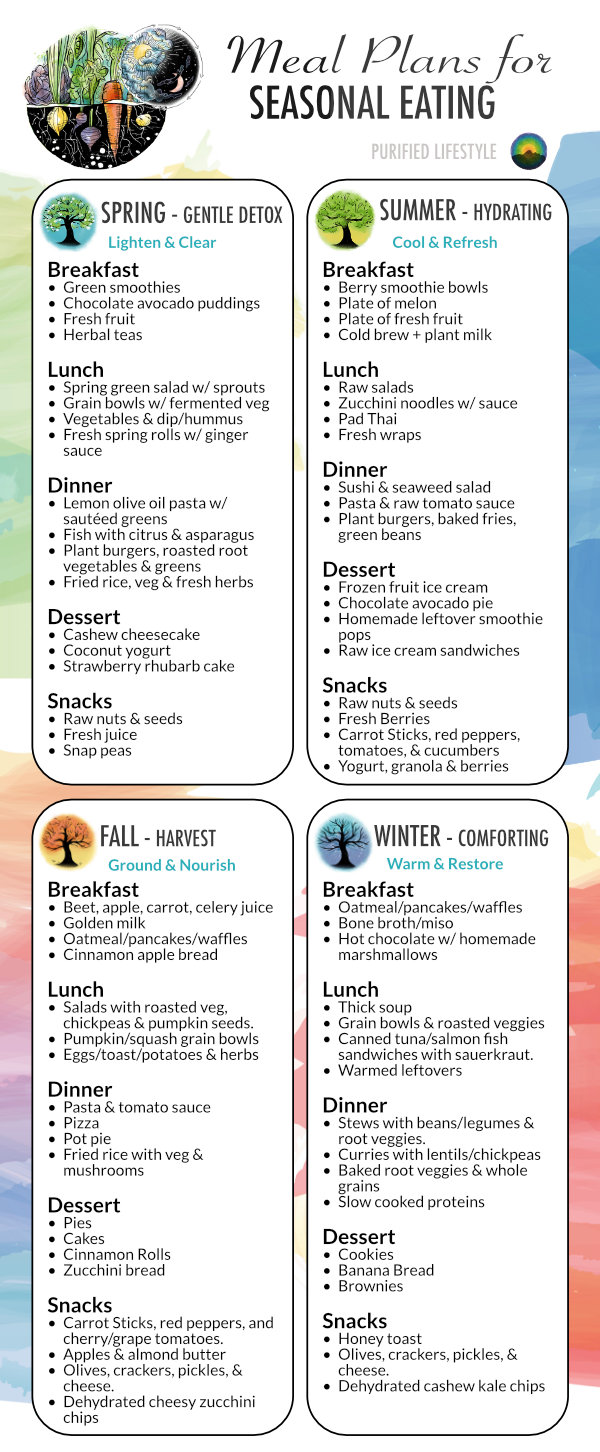
SPRING
RENEWAL & GROWTH
Spring represents renewal, growth, and new beginnings. It's a time when nature awakens from its winter slumber, and the world becomes vibrant and colorful.
Breakfast
- Green smoothies
- Chocolate avocado pudding
- Fresh fruit
- Herbal teas
Lunch
- Spring green salad w/ sprouts
- Grain bowls w/ fermented veg
- Vegetables & dip/hummus
- Fresh spring rolls w/ ginger sauce
Dinner
- Lemon olive oil pasta w/ sautéed greens
- Fish with citrus & asparagus
- Plant burgers, roasted root vegetables & greens
- Fried rice, veg & fresh herbs
Dessert
- Cashew cheesecake
- Coconut yogurt
- Strawberry rhubarb cake
Snacks
- Raw nuts & seeds
- Fresh juice
- Snap peas



Seasonal Eating FAQ
What is seasonal eating?
Seasonal eating is the practice of choosing foods that naturally grow and are harvested during a specific time of year. It focuses on eating in-season produce and adjusting cooking methods based on climate, helping support digestion, energy levels, and overall balance throughout spring, summer, fall, and winter.
What foods are in season each month?
Foods in season vary by region, but generally spring offers leafy greens and asparagus, summer provides berries and tomatoes, fall brings squash and apples, and winter features root vegetables and citrus. Shopping local farmers markets or checking regional produce guides can help identify what’s freshest each month.
Is seasonal eating healthier?
Seasonal eating can support health because in-season produce is often fresher, more nutrient-dense, and aligned with natural energy shifts. Lighter foods in warmer months and warming meals in colder months may support digestion, hydration, and overall metabolic balance.
Is seasonal eating more affordable?
Eating seasonally can be more affordable because in-season produce is often more abundant and widely available. Buying local or shopping sales around seasonal crops can reduce grocery costs while improving flavor and freshness.
Do I have to eat only local food to eat seasonally?
No. Seasonal eating does not require strict local-only rules. It focuses on aligning with natural rhythms and rotating ingredients throughout the year. Frozen, preserved, or imported foods can still be part of a balanced seasonal approach.
Create Your Own Seasonal Meal Rhythm
Reading about seasonal eating is one thing. Building it into your life is another.
If you want to organize your meals around natural rhythms, track favorite seasonal recipes, and build sustainable food habits, explore the Purified Lifestyle Guided Food Journal. Inside, you can:
- Identify your food values & patterns
- Build seasonal meal plans
- Reflect and refine as seasons shift
Seasonal eating becomes simple when you treat it as a rhythm, not a rulebook.
→ Explore the Food Journal here.